
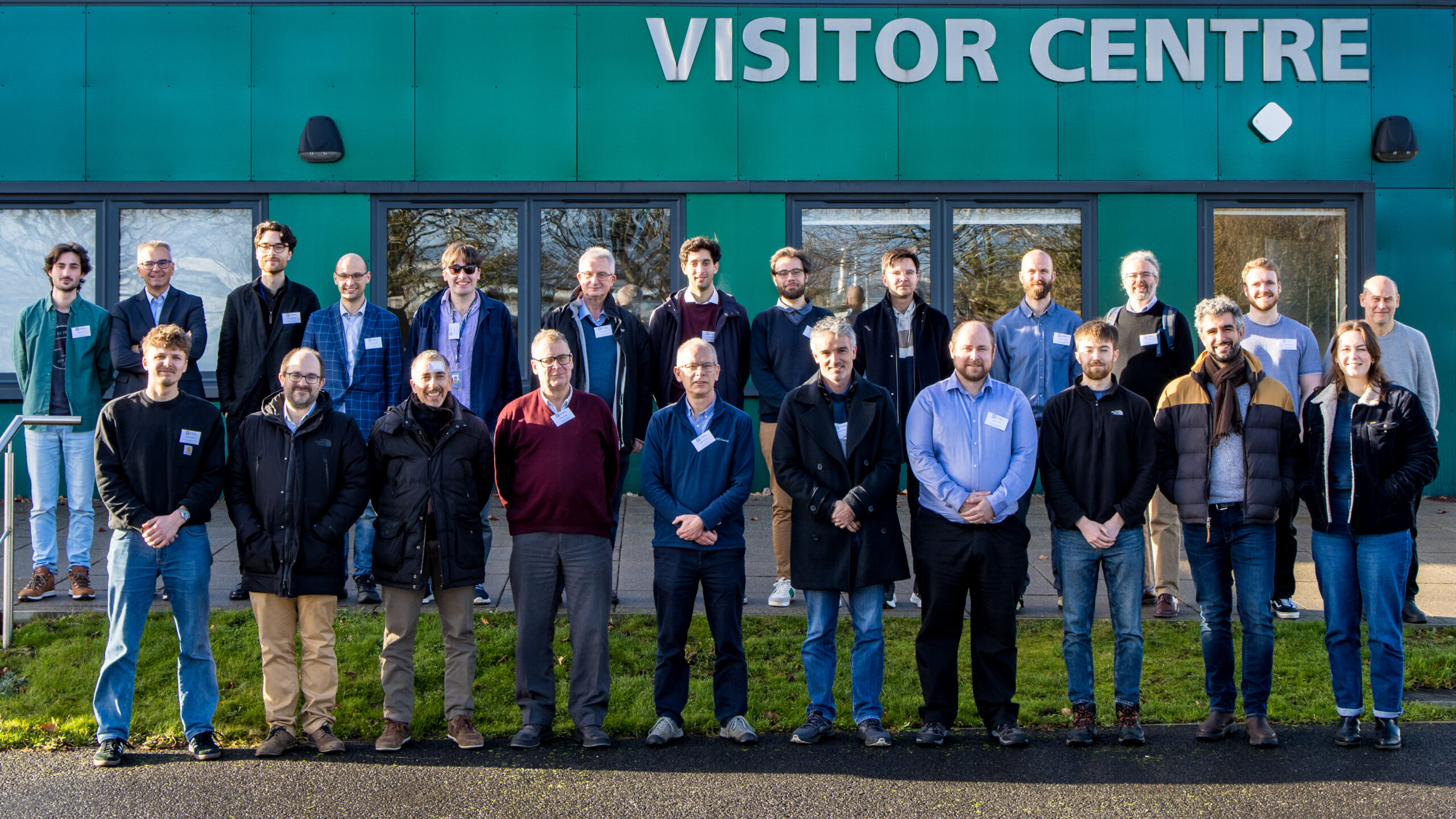
The Laserlab-Europe Expert Group ‘Laser-generated electromagnetic pulses’ (EMPs) brings together researchers interested in understanding how bursts of microwaves and radiowaves are produced by the interaction of high power lasers with matter. EMP radiation is well known as a source of issues for electronic equipment, but researchers are also exploring how this radiation can be used as a diagnostic of plasma processes or as a means of accelerating and manipulating charged particle beams.
The 2025 edition of the Laserlab-Europe EMP Workshop was held at the Rutherford-Appleton Laboratory in November. There were around 50 attendees from national laboratories (ENEA, CELIA, CLF, CESTA, IPPLM, ORION, ELI), universities (University of York, Czech Technical University, Université de Bordeaux) and defence organizations (AFRL, DSTL) around the world – principally the UK and Europe. The meeting was opened by Prof John Collier, Executive Director of the Laserlab-Europe AISBL, and speakers covered a range of topics from advanced diagnostic techniques and EMP mitigation to enhancing EMP for applications in beam acceleration and manipulation, as well as the different characteristics of EMP produced by solid and gaseous targets.
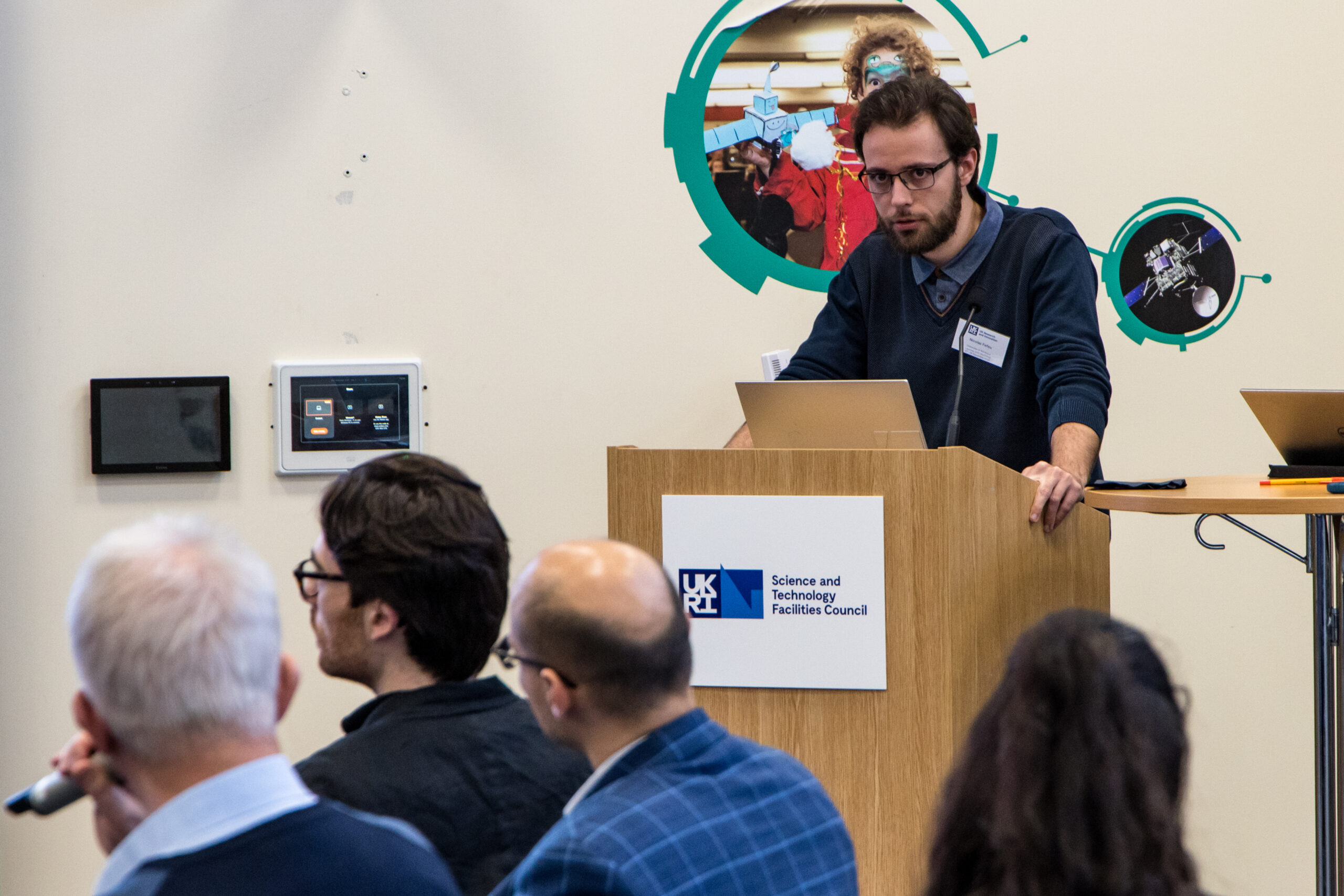
Besides the oral presentations, visitors were taken on tours of the Extreme Photonics Applications Centre, where a new rapid fire petawatt laser is being built. The EPAC laser will see first light in late 2026 and will be a major new tool in the global arsenal for studying the EMP produced by lasers and energetic particle beams. Several speakers highlighted the importance of developing new diagnostics suitable for new, high repetition laser systems like EPAC and Vulcan 20-20. There was also interest in how the group’s expertise could be used to support the global research effort in inertial confinement fusion. Past joint experiments on the Vulcan laser and future collaborations at major European facilities were discussed. The next workshop is planned to take place at the Université de Bordeaux within the next two years.